
Notice Period Buyout: What I Learned Paying My Way Out Early
I had exactly nine days to figure out how to leave a job with a 60-day notice period. A new company wanted me to start in two weeks, the offer was genuinely better than anything I’d had before, and my current employer wasn’t going to just let me walk out early out of goodwill.
That’s when someone in HR mentioned, almost casually, “you could always do a notice period buyout.” I hadn’t heard the term before, and I remember thinking it sounded like something only executives did, not someone at my level. Turns out that’s not true at all, and if you’re stuck in a similar spot right now, here’s everything I wish I’d known before asking about it.
What a Notice Period Buyout Actually Means
In plain terms, a notice period buyout is when you pay your current employer money instead of physically working out the rest of your notice period. You’re essentially buying your remaining days back so you can leave sooner.
It’s not a favor, and it’s not automatic. It’s a financial transaction, calculated pretty mechanically: your daily salary multiplied by however many notice days you haven’t worked yet. My HR contact did the math for me in about thirty seconds once I asked.
Why This Isn’t as Rare as I Assumed
I genuinely thought this was some special executive-only clause. It’s not. Most standard employment contracts, at least the ones I’ve seen across a few different companies, have some version of this option built in, even if nobody ever mentions it unless you specifically ask.
The reason it stays quiet is simple: companies would rather you serve your full notice period so they have time to find a replacement and get a proper handover. This arrangement works against their preference, so it’s not something HR volunteers upfront. You usually have to bring it up yourself.
How the Math Actually Worked in My Case
My monthly salary at the time was roughly PKR 150,000. That works out to about PKR 5,000 a day. I had 20 unworked days left on my notice period after negotiating my last working day down from 60 to 40.
20 days × PKR 5,000 = PKR 100,000.
That was the number my company quoted me for buying out the rest of my notice. It stung, honestly, but it was still worth it compared to losing the new opportunity entirely.
Step-by-Step: How I Actually Negotiated Mine
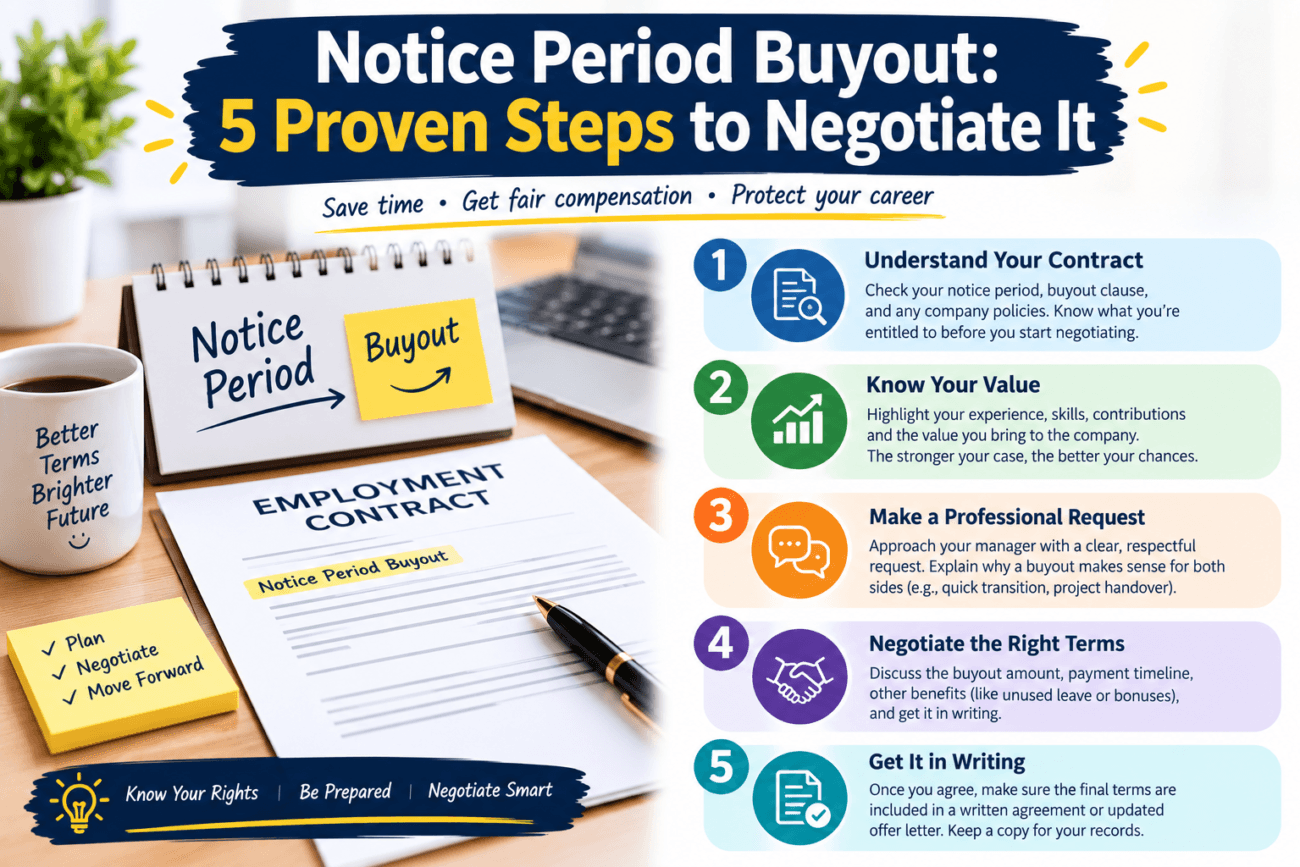
1. I asked directly instead of waiting to be offered the option. Nobody brought it up first. I had to specifically say “is a notice period buyout something we can discuss?” in a conversation with my manager and HR together.
2. I got the new company involved. This was the part that actually saved me the most money. My new employer agreed to reimburse half of the buyout amount as part of my joining terms, since they were the ones pushing for an early start date. If you’re in this situation, ask your new company directly, don’t assume they won’t help.
3. I asked for a partial buyout instead of full. Instead of buying out the entire remaining period, I negotiated my last working day down first through a normal conversation, and only used the buyout for the days that were genuinely non-negotiable. This cut my buyout cost roughly in half.
4. I got everything in writing before paying anything. My HR sent a written confirmation of the exact amount, the exact last working day, and confirmation that this fully settled my notice obligation. I did not pay a single rupee based on a verbal agreement.
5. I confirmed how the payment would actually happen. In my case, the buyout amount was deducted from my full and final settlement rather than being paid separately upfront. This is worth clarifying early, since some companies want it paid directly instead, and that changes your short-term cash flow.
A Mistake I Made That Cost Me Time
I assumed the buyout negotiation would take a day, maybe two. It took closer to a week, because my manager needed sign-off from someone above her, and that person was traveling. My new employer’s start date wasn’t flexible, and for about three days I genuinely didn’t know if the whole thing would fall apart.
Lesson learned: start the notice period buyout conversation the moment you know you need it, not after you’ve already promised your new employer a specific start date. I got lucky with the timing. It could easily have gone the other way.
When a Notice Period Buyout Actually Makes Sense
From what I’ve seen, both from my own experience and comparing notes with friends who’ve done this differently, buying out your remaining notice tends to make sense when:
- A new opportunity has a hard start date that genuinely can’t move
- The new company is willing to cover part or all of the cost
- The financial hit is smaller than what you’d lose by missing the new role entirely
- Your current employer’s culture is reasonably professional about handling early exits
It tends to make less sense when the cost would create real financial strain and there’s some flexibility on the new job’s start date. I’d have pushed harder for a later start date if my old employer had refused the buyout entirely.
Common Mistakes People Make
- Assuming this option isn’t available and never asking about it.
- Not involving the new employer in the conversation, when they often have more flexibility to help than people expect.
- Verbally agreeing to a number without getting it in writing.
- Not clarifying whether the amount will be deducted from your final settlement or needs to be paid separately.
- Negotiating the buyout before trying to simply shorten the notice period through normal discussion first, which is usually cheaper.
How This Connects to the Rest of Your Exit Paperwork
If you do end up going the notice period buyout route, that cost usually shows up as a deduction in your full and final settlement rather than as a separate bill, so it helps to already understand how that whole process works before you’re in the middle of negotiating an early exit. Our guide on full and final settlement covers exactly what typically gets included and deducted.
Final Thoughts
A notice period buyout isn’t something to be intimidated by, and it’s definitely not just for senior executives with fancy contracts. It’s a fairly standard, calculable option that most companies can offer if you’re willing to ask directly and negotiate the details properly.
Get the new employer involved if you can, negotiate the days down before agreeing to buy out the rest, and always get the final number and terms in writing before you commit to anything. It cost me more than I wanted to spend, but it got me into a role I would have otherwise lost entirely, and looking back, that trade-off was worth it.
For a broader look at how employment contract terms and exit negotiations generally work, see Indeed’s overview of resignation and notice period practices.

One thought on “Notice Period Buyout: 5 Proven Steps to Negotiate It”