
How to Write a Two Weeks Notice Letter (Without Overthinking It for Three Days)
I sat on a blank email draft for almost three days once, trying to figure out how to write a two weeks notice letter that sounded professional but also somehow explained everything I was feeling about leaving that job. Spoiler: it doesn’t need to explain anything. I eventually wrote something that took about four minutes and was maybe sixty words long, and it worked perfectly fine. All that overthinking was completely unnecessary, and I wish someone had just told me that upfront.
If you’re staring at your own blank draft right now, here’s what I learned, including the version I almost sent that would’ve been a mistake.

The Draft I Almost Sent (And Why It Would’ve Backfired)
My first attempt was nearly 300 words long. It thanked my manager for specific projects, mentioned why I was leaving, hinted that the new role paid better, and included a paragraph about how I’d miss certain coworkers. I showed it to a friend before sending, and she stopped me almost immediately. Her point was simple: nobody remembers a long, emotional resignation letter fondly. They remember whether it was clean and professional.
That one conversation saved me from a letter that, looking back, would’ve felt oddly personal for something that’s really just a formal notification.
What a Two Weeks Notice Letter Actually Needs
Turns out the actual requirements are much shorter than what most people, including past me, assume. Really, it needs:
- A clear statement that you’re resigning
- Your exact last working day
- A brief, genuine line of thanks
- An offer to help with the transition, kept realistic
That’s it. Everything else is optional, and in most cases, better left out entirely, which is really the whole secret behind how to write a two weeks notice letter that actually lands well.
The Version That Actually Worked
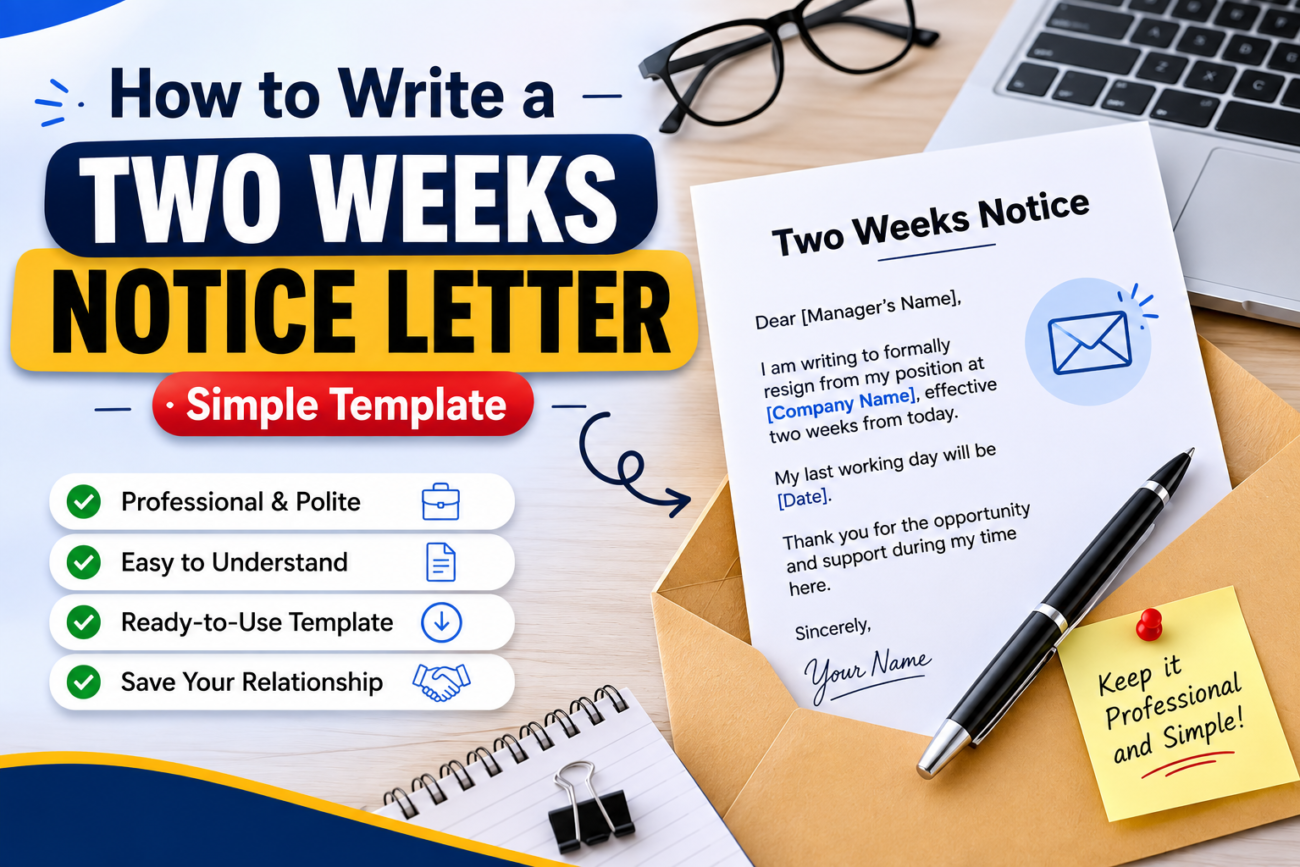
Here’s roughly what I ended up sending, trimmed down from that overwritten first draft:
“Dear [Manager’s Name], I’m writing to let you know I’ll be resigning from my position as [Job Title], with my last day being [exact date, two weeks out]. Thank you for the opportunities and support during my time here. I’ll do what I can to make the transition smooth over the next two weeks. Please let me know how I can help.”
Under seventy words. No drama, no explanation, no lingering emotional undertone. My manager replied within the hour, thanked me, and we scheduled a quick call to talk logistics. The whole thing was far less dramatic than I’d built it up to be in my head.
Step-by-Step: How I’d Write One Now
- Pick your exact last day first, before writing anything else. Count two full weeks from today, and if that lands on a weekend, adjust to the nearest weekday that makes sense with your company’s schedule.
- Tell your manager in person or on a call before sending the written notice, if that’s realistically possible. I made the mistake once of sending an email cold, with zero heads-up, and my manager found out from an email instead of a conversation. It wasn’t a great look.
- Keep the letter to four or five sentences max. If you’re writing more than that, you’re probably explaining things nobody asked for.
- Send it directly to your manager first, not the whole team, not HR as a first move. Let your manager decide how and when the wider team hears.
- Save a copy for yourself. I’ve needed to reference the exact date I gave notice more than once, for things like calculating final pay or benefits cutoff dates.
What to Leave Out, Even If It’s Tempting
A few things I’ve since learned to avoid entirely, some from my own near-mistakes, some from watching other people’s letters go sideways:
- Any explanation of why you’re leaving, whether it’s a better offer, frustration, or burnout. None of it needs to be in this document.
- Complaints about management, workload, or specific coworkers, even if they’re valid. This letter becomes part of your permanent employment record.
- Vague promises like offering to fully train your replacement or finish every open project. Offer realistic help, not an open-ended commitment you can’t actually deliver in two weeks.
- Any mention of negotiating pay, title, or responsibilities. If you want to try negotiating your way into staying, that conversation needs to happen before you send this letter, not inside it.
A Slightly Different Version for a Harder Situation
Not every resignation happens on good terms. A friend of mine had to give notice at a job where things had gotten genuinely difficult with her manager. Even then, the letter itself stayed neutral:
“Dear [Manager’s Name], please accept this as formal notice of my resignation from my role as [Job Title]. My last working day will be [date]. I’m happy to help wrap up any outstanding items before then.”
No warmth added where it wasn’t genuine, but also no venting. Professional and short covers both a great exit and a rocky one equally well, and it’s proof that how to write a two weeks notice letter doesn’t change much even when the situation isn’t ideal.
The Conversation Matters More Than the Letter
Honestly, the letter itself ended up being the easy part. The actual conversation with my manager beforehand was more nerve-wracking, and I’d suggest treating that as the real event, with the letter simply as the written follow-up confirming what you already said out loud. If you’ve been debating whether it’s actually time to make this move at all, it’s worth looking back at signs you should quit your job first, since that decision should really be settled before you’re staring at this letter in the first place.
How Employers Actually Read These Letters
According to Indeed’s guide on writing a two weeks’ notice letter, keeping the tone professional and appreciative, even in a difficult exit, genuinely helps preserve future references and professional relationships. That lines up exactly with what my friend in HR told me afterward, she said the short, clean letters were always the ones that left the best final impression, regardless of how the employee actually felt walking out the door.
Final Thoughts
Figuring out how to write a two weeks notice letter turned out to be one of those tasks that felt much bigger in my head than it actually was on paper. Four sentences, one clear date, a genuine thank you, and a realistic offer to help. That’s really the whole formula. Save the actual explanations and feelings for a conversation with people you trust, not for a document that becomes part of your permanent work history. It took me three days of overthinking to learn that the short version was always the right one, and if you’re wondering how to write a two weeks notice letter yourself right now, that’s really all you need.

2 thoughts on “How to Write a Two Weeks Notice Letter: 5 Proven Steps”