
Probation Confirmation Letter: What to Do When It’s Late (Or Never Comes)
My probation period ended on a Friday. I remember because I’d mentally circled that date for three months, assuming Monday would bring some kind of official “welcome, you’re confirmed” moment. Monday came and went. So did the following two weeks. Nobody said anything, and I genuinely didn’t know if I was still on probation, quietly confirmed, or somehow forgotten about entirely.
I finally asked my manager, half-joking, “so am I still on trial or what?” She looked mildly surprised and said “oh, HR should’ve sent your confirmation letter weeks ago.” That conversation is the entire reason I’m writing this, because nobody had explained to me that a probation confirmation letter isn’t always automatic, and silence doesn’t necessarily mean bad news.
What This Letter Actually Does
A probation confirmation letter is the formal document your employer gives you once your probation period ends successfully. It’s the paper trail that says, officially, you’re no longer “on trial,” you’re a permanent employee with whatever benefits and protections that status brings at your company.
Without it, you’re in a strange in-between zone. Verbally, everyone might treat you as confirmed. On paper, if nobody’s issued the letter, you technically don’t have proof of that status.
Why Mine Was Late (And Why That’s More Common Than You’d Think)
When I finally got an answer, it turned out my manager had verbally approved my confirmation weeks earlier, but the actual probation confirmation letter needed sign-off from a department head who’d been on leave. Nobody had flagged it as urgent because, from the company’s side, nothing was actually changing operationally. I was already working, already being paid, already treated like a regular employee. The letter was just administrative catch-up.
That’s honestly the pattern I’ve seen since, comparing notes with a few friends who went through the same thing. The letter often lags behind the actual decision, sometimes by weeks, because it’s rarely anyone’s top priority once the “will this person be confirmed” conversation has already happened informally.
What Should Actually Be In One
When mine finally arrived, it covered:
- My name, employee ID, and job title
- The date my probation officially started and ended
- A short line confirming successful completion
- Any changes to my terms, in my case, a slightly longer notice period now that I was confirmed
- A confirmed effective date for my new permanent status
If a company’s version is missing key details like the effective date or any changes to your notice period, it’s worth asking for clarification. Mine originally left out the new notice period detail, and I only caught it because I happened to reread my original offer letter side by side with it.
Step-by-Step: What I’d Do Differently Next Time
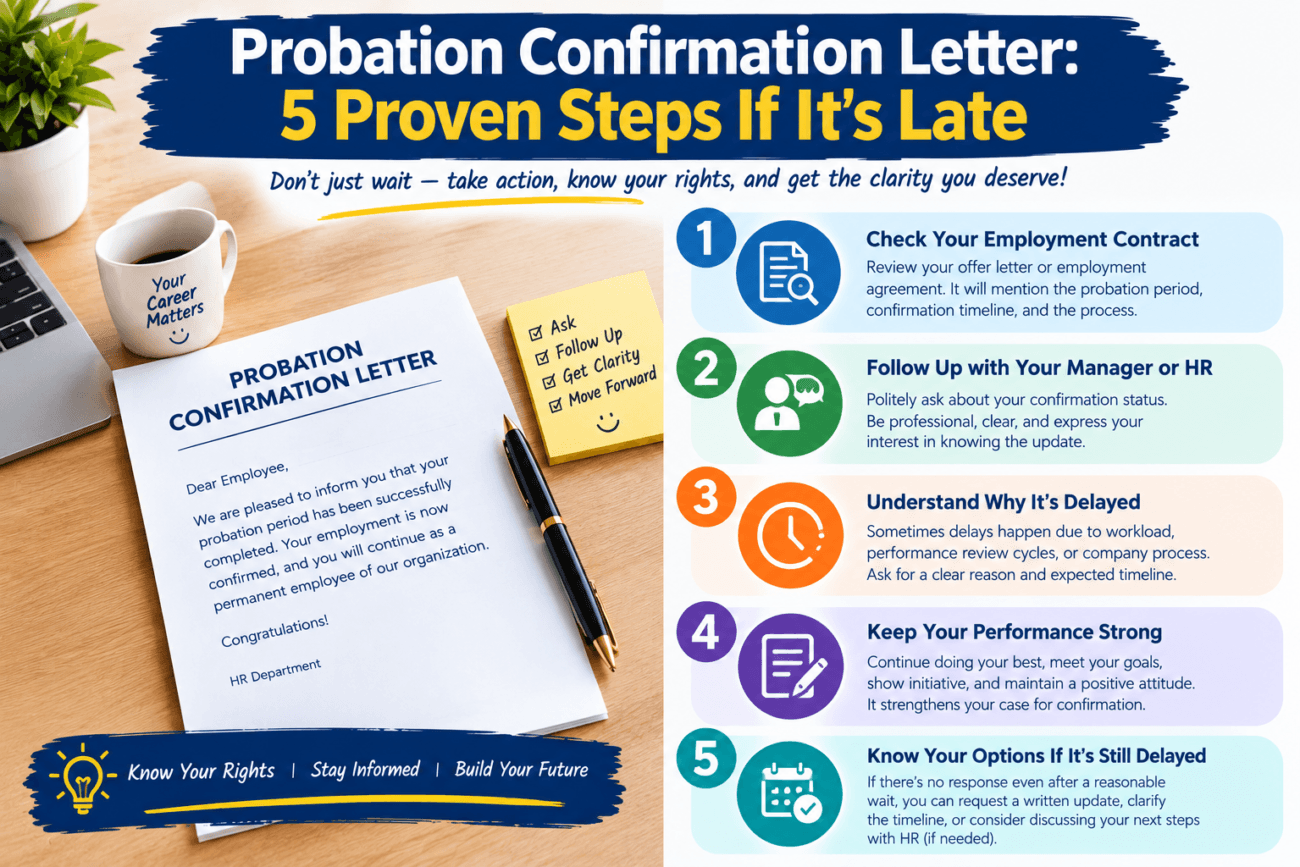
1. Ask about the confirmation process during onboarding, not after probation ends. I never asked how or when this would happen until I was already confused about the silence. A simple question in your first week, “what does the confirmation process look like at the end of probation,” sets expectations early.
2. Mark your probation end date and follow up a week after, not months after. I waited almost three weeks before saying anything, mostly out of awkwardness. A polite check-in closer to your actual end date catches delays before they drag on.
3. Don’t assume no letter means bad news. This was my biggest source of unnecessary stress. I spent two weeks quietly worried I’d failed probation and nobody wanted to tell me, when the real reason was just an approval bottleneck. If you’re genuinely unsure, ask directly rather than assuming the worst.
4. Read the letter fully once it arrives, don’t just skim for the good news. I almost missed the updated notice period term because I was mostly just relieved to see “confirmed” in writing. Read the details, not just the headline.
5. Keep a copy somewhere permanent. I keep mine in the same folder as my offer letter and appointment letter. It’s come up exactly once since, during an internal transfer conversation where HR wanted proof of my confirmed status and tenure.
A Mistake I Made
I mentioned to a coworker, casually, that I thought I might have failed probation because nobody had confirmed anything yet. That comment made its way back to my manager faster than I expected, and led to an awkward conversation where she had to reassure me everything was fine before the actual letter even existed yet.
Lesson learned: if you’re anxious about a delayed probation confirmation letter, ask the person who’d actually know, directly and privately, instead of voicing the worry to coworkers who’ll just speculate along with you.
What To Do If It Genuinely Never Comes
Sometimes the delay isn’t a bottleneck, it’s a company that simply doesn’t formalize this step well. If it’s been well over a month past your probation end date with total silence:
- Send a polite, direct email to HR or your manager asking specifically about your confirmation status and requesting the letter in writing.
- If the response is vague or repeatedly delayed, ask what changed operationally on your official confirmation date, some companies confirm verbally and consider the paperwork a formality they’re slow to produce.
- If you’re planning to use this document for something specific, a loan application, a new job’s background check, explain that upfront. It tends to move things along faster than a general request.
Common Mistakes People Make
- Assuming silence after probation automatically means something went wrong.
- Not asking about the confirmation process early enough to know what “normal” looks like at your company.
- Skimming the letter for the good news and missing changed terms buried in the details.
- Venting anxiety to coworkers instead of asking the actual decision-maker directly.
- Losing track of the letter once received, then scrambling for it later when a new employer or lender asks for proof.
Where This Fits Into Your Early Career Timeline
Getting your probation confirmation letter is really just one more step in a sequence that starts the moment you walk in the door. If you’re still fairly new in your role, it’s worth revisiting our guide on first day at new job tips, since a lot of the habits that make your first few months smoother are also what make probation conversations feel less nerve-wracking when the time comes.
Final Thoughts
A delayed probation confirmation letter feels a lot scarier than it usually is. In my case, and in most of the stories I’ve heard since, the delay was administrative, not a hidden verdict on my performance.
Ask early about how the process works, follow up politely instead of waiting anxiously, and read the actual document carefully once it arrives instead of just filing it away in relief. It’s a small piece of paperwork, but it’s worth treating it like the official record it actually is.
For a broader look at how probationary periods and employee status transitions typically work, see SHRM’s overview of probationary period practices.
