
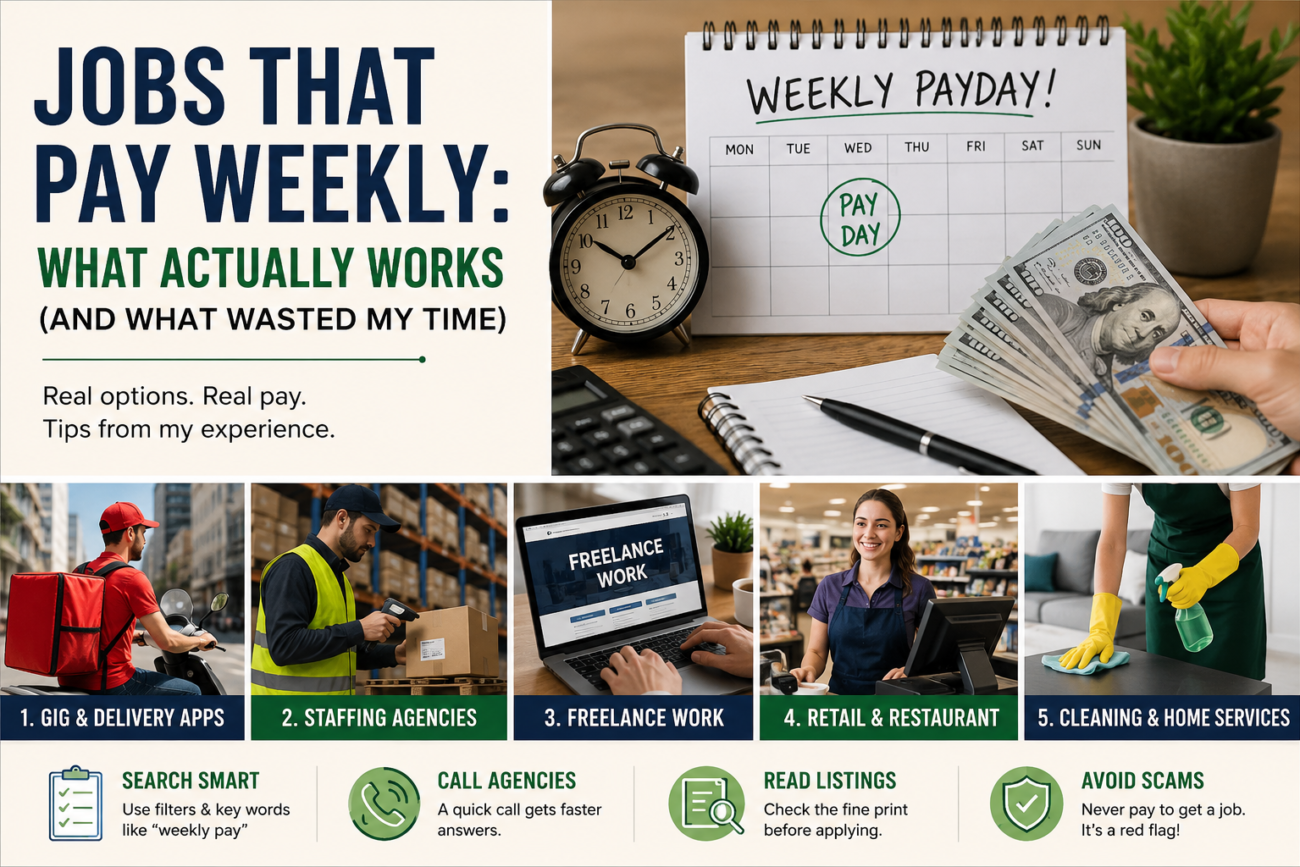
Jobs That Pay Weekly: What Actually Works (And What Wasted My Time)
A few years back, I was in that spot where rent was due and payday was still twelve days out. Not fun. That’s the exact moment I started digging into jobs that pay weekly instead of the usual bi-weekly or monthly cycle most companies default to. And honestly, I went down a rabbit hole of listings that promised weekly pay and turned out to be either exaggerated or straight-up not worth the effort.
So this isn’t a generic “here’s a list” post. This is what I actually found useful, what wasted my time, and how to tell the difference before you sink hours into an application.
Why Weekly Pay Even Matters
If you’ve never been in a cash-flow crunch, this might sound like a small detail. It’s not. When you’re waiting on a paycheck and bills don’t care about your pay schedule, the difference between weekly and bi-weekly pay can be the difference between covering rent on time or scrambling.
Jobs that pay weekly aren’t necessarily better jobs overall, but for anyone who needs consistent, shorter cash cycles — students, people between full-time roles, or just anyone tired of budgeting around a two-week gap — they solve a very specific problem.
Where I Actually Found Weekly-Pay Work
1. Gig and Delivery Apps
This is the obvious one, but it’s obvious because it works. Apps like DoorDash, Instacart, and Uber typically pay out weekly by default, and some even offer instant cash-out for a small fee if you genuinely can’t wait until the weekly cycle. I used Instacart for about four months during a slow stretch, and the weekly deposits landed like clockwork every Wednesday.
The catch nobody tells you upfront: your actual take-home depends heavily on your city and how saturated the app already is with other drivers or shoppers. In a smaller city, I made noticeably less per hour than a friend doing the same thing in a bigger metro area.
2. Staffing Agencies for Warehouse and Light Industrial Work
This one surprised me. Local staffing agencies that place people in warehouse, packing, or light assembly roles very often run weekly payroll, since a lot of their workforce is temporary or seasonal and expects faster turnaround. Companies like Kelly Services and local temp agencies in most cities operate this way.
I’ll be honest, the work itself isn’t glamorous. But if you need weekly income while you sort out something more long-term, it’s a legitimate option, and you’re getting paid through a real payroll system, not some vague app promise.
3. Freelance Platforms With Fast Payout Options
Upwork and Fiverr aren’t weekly-pay by structure exactly, but you can request withdrawals frequently once funds clear, which for smaller, fast-turnaround gigs, ends up functioning like weekly income if you’re consistent about picking up small jobs. I’ve pulled money out from Fiverr twice in one week before, just by finishing quick logo tweaks and short writing gigs back to back.
The lesson I learned the hard way here: don’t quote your first few gigs too low just to get reviews fast. I did that early on, and it took months to raise my rates back up because clients kept expecting the same low price.
4. Retail and Restaurant Chains That Advertise Weekly Payroll
Some regional retail chains and restaurant groups specifically advertise weekly pay as a hiring perk, especially in areas competing hard for hourly workers. It’s worth checking the careers page of local chains directly, since this detail often doesn’t show up clearly on aggregator sites like Indeed unless you read the fine print of the listing.
A friend of mine worked at a regional grocery chain that paid weekly specifically because they knew it helped them compete against bigger companies for hourly staff. Small detail, but it mattered enough that they built their hiring pitch around it.
5. Cleaning and Home Service Platforms
Apps like Handy and similar home-service platforms often run weekly payout cycles too. It’s inconsistent work depending on how many bookings come through your area, but for people who already have some flexibility in their schedule, it can stack decently with something like gig delivery work on slower days, and it’s one more solid entry on the list of jobs that pay weekly worth trying.
Step-by-Step: How I’d Actually Search for These Now
If I were starting from scratch today, here’s the order I’d do things in:
- Check the app-based gig platforms first — DoorDash, Instacart, Uber. Fastest to actually start earning, usually within a day or two of signing up.
- Call a local staffing agency directly instead of only browsing their website. A five-minute phone call often gets you faster answers about pay schedule than digging through their site.
- Search “weekly pay” directly in job board filters. Indeed and ZipRecruiter both let you filter or search this phrase specifically, and it cuts out a lot of guesswork.
- Read the actual listing, not just the title. Some postings say “weekly pay” in the headline but the fine print says it starts after a 30-day probation period. Always check.
- Ask directly in the interview if it’s not mentioned. It’s a completely normal question, and any legitimate employer will answer it without hesitation.
Mistakes I Made Along the Way
I wasted a solid week applying to a handful of “work from home, paid weekly” listings that turned out to be commission-only sales roles disguised as regular jobs. The pay structure technically was weekly, but the actual income depended entirely on sales I never had a real shot at hitting without an existing client base. Lesson learned: “weekly pay” and “guaranteed weekly income” are two very different promises, and some jobs that pay weekly on paper blur that line on purpose.
I also underestimated how much gig work income varies week to week. My first month on Instacart, one week I made noticeably more than the next simply because of weather and how many people were ordering groceries instead of going out. Don’t budget your rent money assuming every week will match your best week.
A Quick Word on Scams
If a listing for jobs that pay weekly asks you to pay for a “starter kit,” training materials, or any kind of deposit before you start, that’s a red flag, full stop. According to the Federal Trade Commission’s job scam resource, no legitimate employer requires payment from you as a condition of getting hired or paid. I ran into exactly one of these early on and thankfully backed out before sending any money, but it was a close enough call that I now double-check every listing that feels a little too smooth.
If You’re Also Building a Resume Alongside This
A lot of the roles above don’t require a polished resume, but if you’re using weekly-pay work as a bridge while applying to something more permanent, it’s worth having a solid one ready anyway. I put together some practical steps in how to write a resume with no experience that cover exactly this kind of in-between situation, where you’ve got real work history but maybe not in a traditional format yet.
Final Thoughts
Jobs that pay weekly aren’t hard to find once you know where to actually look, but a lot of the top search results are recycled listicles that don’t tell you the real day-to-day experience. Gig apps get you earning fastest. Staffing agencies are steady but less flashy. Freelance platforms take longer to ramp up but scale well once you’re established. None of these are perfect, and the pay isn’t always consistent week to week, but for anyone who needs cash flow that doesn’t wait two full weeks, one or two of these options will genuinely bridge the gap while you figure out the bigger picture.
