
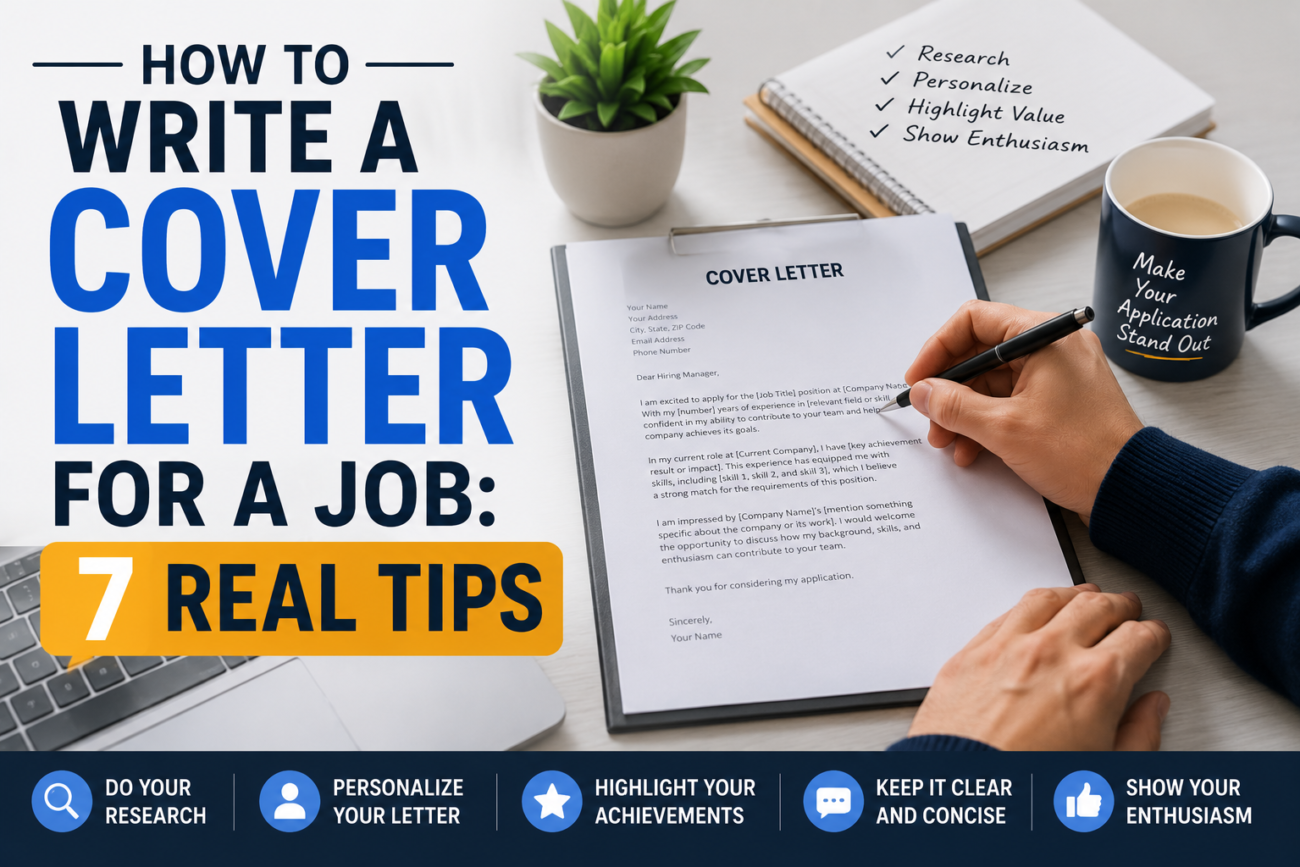
How to Write a Cover Letter for a Job (That Doesn’t Sound Like Everyone Else’s)
You’ve probably opened a blank document, typed “Dear Hiring Manager,” and then just… sat there. Staring. Wondering what on earth you’re supposed to say that isn’t already sitting right there on your resume. If that’s where you’re at right now, you’re not doing anything wrong — this is genuinely one of the hardest parts of applying for a job, and most advice out there makes it sound way more formal and stiff than it needs to be.
Learning how to write a cover letter for a job doesn’t require some magic formula. It mostly comes down to saying something real, in a way that actually sounds like you wrote it, instead of pulling from a template that a thousand other applicants used last week.
First, Figure Out What It’s Actually For
A lot of people treat the cover letter like a second resume — just restating the same bullet points in paragraph form. That’s the fastest way to make it forgettable. The resume already lists what you did. The cover letter’s job is different: it’s there to explain why you did it, why you care about this particular role, and what you’d actually bring to the team beyond the list of skills.
Think of it less as a formality and more as your one chance to sound like an actual person before someone reads your name off a spreadsheet of applicants.
Skip the Generic Opening Line
“I am writing to apply for the position of [Job Title]” — if you’ve ever read a cover letter, you’ve read this sentence a hundred times, and so has every hiring manager. It tells them nothing they don’t already know from the subject line of your email.
Instead, open with something specific. Maybe it’s a quick line about why this company caught your attention, or a small detail that connects your background to what they’re building. Something like:
“I’ve used [Company]’s product for two years now, and when I saw this role open up, it felt like a pretty direct match for what I’ve been doing at my current job — just with more room to actually own the strategy side.”
That one line already says more about you than three generic sentences would, and it’s really the single biggest shift in how to write a cover letter for a job that actually gets read.
Keep It Short. Seriously.
One thing that trips people up while figuring out how to write a cover letter for a job is assuming longer means more thorough. It doesn’t. Most hiring managers are skimming, not reading word for word, especially early in the hiring process when they’re going through dozens of applications in one sitting.
Three to four short paragraphs is plenty. If you’re pushing past 400 words, go back and cut. Almost nothing gets lost by trimming — usually the opposite happens, and the letter gets stronger.
Pick One or Two Stories, Not a Full Career Recap
Rather than trying to summarize everything you’ve ever done, pick one specific example that shows you can actually do the job well. A short story beats a list every time.
Say you’re applying for a project coordination role. Instead of writing “I have strong organizational skills,” try something like:
“At my last job, I was handed a project three weeks behind schedule with a client who was already frustrated. I rebuilt the timeline, got weekly check-ins going with the team, and we delivered two days early. That kind of pressure is honestly where I do my best work.”
That’s specific. It’s memorable. And it does more convincing in three sentences than a whole paragraph of adjectives ever could — which is really the core idea behind how to write a cover letter for a job that stands out.
Match Your Tone to the Company
A cover letter for a creative agency and one for a law firm probably shouldn’t sound the same, and that’s fine. Look at how the company talks about itself on their website or job posting. If it’s casual and direct, mirror that a little. If it’s more formal, dial your tone back accordingly.
This doesn’t mean pretending to be someone you’re not — it just means reading the room a bit before you hit send.
End With Something Other Than “I Look Forward to Hearing From You”
That closing line has been used so many times it barely registers anymore. Try ending with something a little more specific to the conversation you’d actually want to have, like mentioning you’d welcome the chance to talk through how your experience lines up with what they’re building next, or a small note about your availability.
It’s a tiny detail, but small, specific closings tend to stick with people more than the generic sign-off everyone defaults to.
A Simple Structure to Follow
If you’re staring at a blank page and need somewhere to start, here’s a loose structure that works for almost any role:
- A specific, genuine opening line — not the generic “I am writing to apply” sentence
- One clear example that shows you can actually do the job
- A short line connecting your background to what the company is doing right now
- A closing that’s specific rather than a copy-paste sign-off
You don’t need to follow this word for word, but it’s a solid skeleton for how to write a cover letter for a job when you’re not sure where to begin.
Pair It With a Resume That Backs It Up
A strong cover letter only really works if the resume behind it holds up too. If you haven’t already tightened that part up, it’s worth going back through how to write a resume that gets you hired so both documents are pulling in the same direction instead of one propping up a weaker other.
According to Harvard’s career guide on cover letters, even a well-written cover letter can’t fix a resume that doesn’t match the role — the two are meant to work together, not carry the weight separately.
Final Thoughts
Figuring out how to write a cover letter for a job gets a lot easier once you stop trying to sound impressive and start trying to sound honest. Pick one real story, keep it short, and write it the way you’d actually explain yourself to someone if they asked you directly why you wanted the job. That version is almost always more convincing than the polished, formal one everyone else is sending in.
