
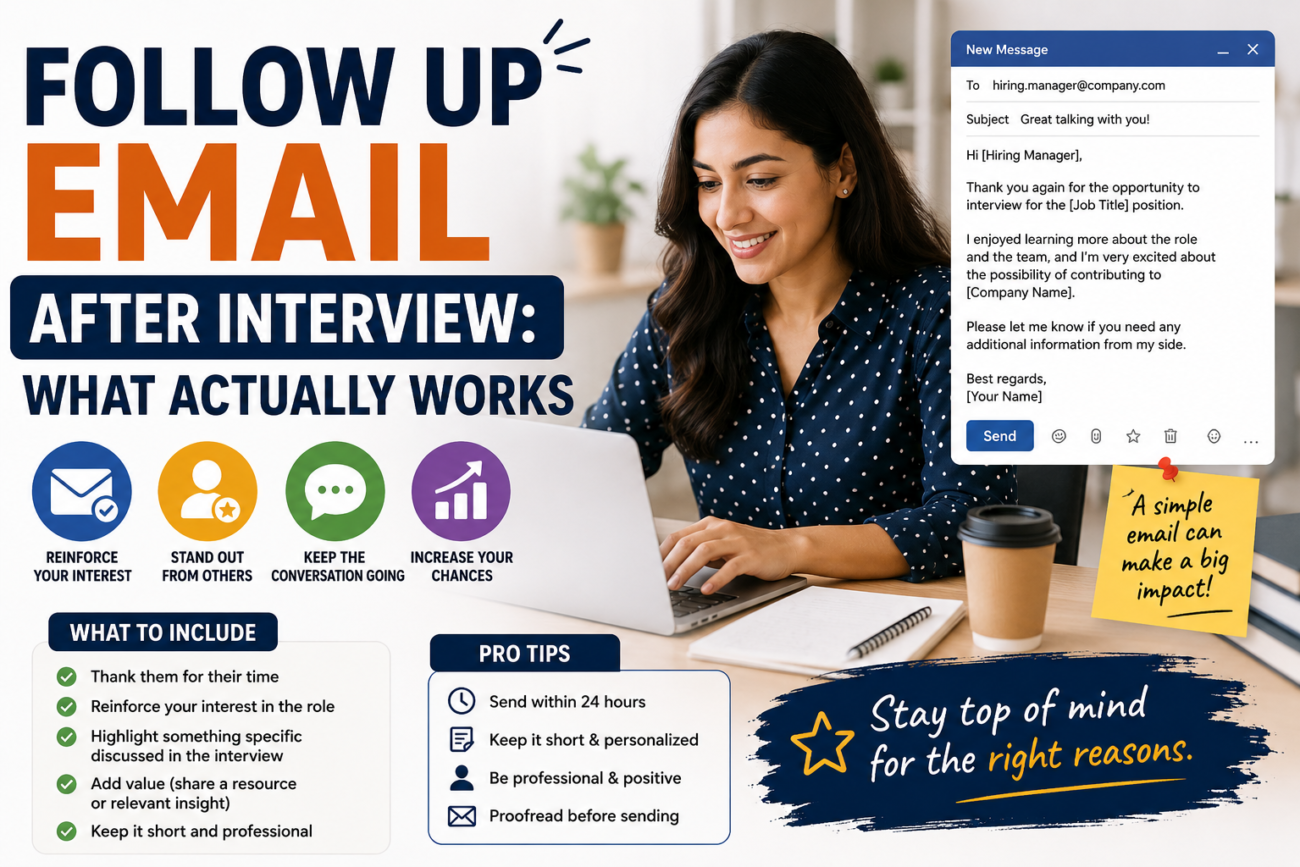
Follow Up Email After Interview: What I Send Now vs. What I Used to Send
The first time I ever sent a follow up email after interview, I wrote something like “Just checking in to see if you’ve made a decision yet!” and hit send about four days after the interview. Silence. Total silence, for the rest of that process. It wasn’t until years later, after I’d been on the other side of the table doing some of the hiring myself, that I understood exactly why that email landed with a thud.
So this isn’t going to be a generic “always send a thank you note” post. It’s what I actually learned from writing bad follow-up emails, then good ones, and eventually reading a bunch of them as the person receiving them.
Why This Actually Matters More Than People Think
I used to assume follow-up emails were basically just a nice-to-have, a small courtesy that probably didn’t move the needle much either way. Then I sat on the hiring side of two different roles and realized how wrong that assumption was. When you’re comparing two candidates who interviewed almost identically well, a specific, well-timed follow up email after interview genuinely becomes a tiebreaker. It’s one of the only moments in the whole process where a candidate controls exactly what the hiring manager sees, with zero interruptions or nerves involved.
The Email I Wish I’d Sent That First Time
Here’s roughly what I send now, adjusted depending on the role, sent within about 24 hours:
“Hi [Name], thank you again for taking the time to talk with me today. I really enjoyed hearing about [specific thing they mentioned, like a project or team challenge], and it made me even more excited about the possibility of contributing to [specific team or goal]. If there’s anything else you need from me as you move through the process, just let me know. Looking forward to hearing about next steps.”
That’s it. Under a hundred words. The difference between this and my old “just checking in” version is night and day, mostly because of one specific choice that changed how I approach every follow up email after interview since.
The One Thing That Actually Makes These Emails Work
Reference something specific. Not “I enjoyed our conversation,” which could apply to literally any interview anyone’s ever had. Something like “I enjoyed hearing about how your team restructured the onboarding process last quarter” tells the reader you were actually present and paying attention, not just running through a script.
I started keeping a tiny note on my phone during interviews now, just two or three words jotted down about something specific mentioned, so I actually have real material to reference afterward instead of trying to remember it hours later.
Step-by-Step: How I Actually Time These Now
- Send the thank-you email within 24 hours. Same day if the interview ends early enough, next morning if it wraps up late in the day. Waiting three or four days, like I used to, makes it feel like an afterthought instead of genuine enthusiasm.
- If they gave you a specific timeline, respect it. If someone says “we’ll be making a decision by the end of next week,” don’t email them three days later asking for an update. Wait until that window has actually passed.
- If no timeline was given, follow up about a week after the interview if you haven’t heard anything. Keep it short.
- If that goes unanswered too, one more short note about a week later is fine. After that second follow-up, I generally let it go and keep applying elsewhere.
What the Second Follow-Up Actually Looks Like
This is the one people get wrong the most, myself included early on. It’s not the same email as the thank-you note, and it shouldn’t sound anxious. Something like:
“Hi [Name], hope you’re doing well. I wanted to check in on the timeline for the [job title] role, I remain very interested and happy to provide anything additional that would help with the decision. Thanks again for your time.”
Short, low-pressure, and it makes it easy for them to respond with even a quick “still deciding, should know more next week.” That tone is really what separates a good follow up email after interview from one that feels pushy.
The Mistake That Cost Me an Otherwise Strong Application
Years back, I sent a follow-up that was way too long, almost 300 words, re-explaining basically my entire resume and re-pitching myself for the role all over again. I thought I was being thorough. I found out later from a friend who worked there that it actually came across as a little desperate, like I was trying too hard to convince them after the interview had already ended. Short and specific beats long and re-persuasive, every single time.
A Small Trick That Actually Got a Response Once
I once mentioned in a follow-up that an article I’d read reminded me of something the interviewer had said about their team’s approach to a specific problem, and linked it with a single line: “This made me think of what you mentioned about [topic], thought you might find it interesting.” That email got an actual reply within an hour, which almost never happened with my standard thank-you notes. It’s a small move, but it shows genuine ongoing interest rather than just going through the motions.
Should You Email the Recruiter or the Interviewer Directly?
If you have both contacts, I usually send the thank-you directly to whoever interviewed me, and loop the recruiter in if they were coordinating the process. If it’s a panel interview with multiple people, individual short notes to each person tend to land better than one generic group email, even if it takes a bit more time to write.
Subject Lines and Threading
Honestly, the easiest approach is just replying to the original email thread from scheduling the interview, rather than starting a brand new email. It keeps context intact and usually doesn’t even need a new subject line. According to a recruiter’s guide on interview follow-ups, replying within the existing thread tends to get better response rates than starting fresh, likely because it’s immediately recognizable without requiring the reader to piece together who you are again.
Common Mistakes Worth Avoiding
- Sending it too late, three or four days after the interview, so it reads as an afterthought
- Writing something generic enough that it could apply to any interview, anywhere
- Following up too aggressively, more than two or three times total
- Making the follow-up read like a second pitch instead of a short, genuine note
- Forgetting to actually proofread it, a typo in a follow-up email undoes some of the polish you were trying to project
If You’re Still Prepping for the Interview Itself
If you haven’t had the actual interview yet and you’re reading this ahead of time, it’s worth getting the conversation itself right first, since that’s what you’ll actually be referencing in this email. How to answer tell me about yourself in an interview covers the part that comes right before this one, and getting that solid gives you a lot more specific material to pull from afterward.
Final Thoughts
A follow up email after interview isn’t complicated, but it’s easy to get slightly wrong in ways that quietly undercut it, sending it too late, keeping it too vague, or making it too long. The version that actually works is short, specific, sent within a day, and references something real from the conversation instead of a generic thank you. It took me a few awkward, ignored emails to figure that out. Hopefully this saves you a couple of those the next time you’re staring at a blank draft trying to figure out your own follow up email after interview.

2 thoughts on “Follow Up Email After Interview: 5 Proven Tips That Work”