
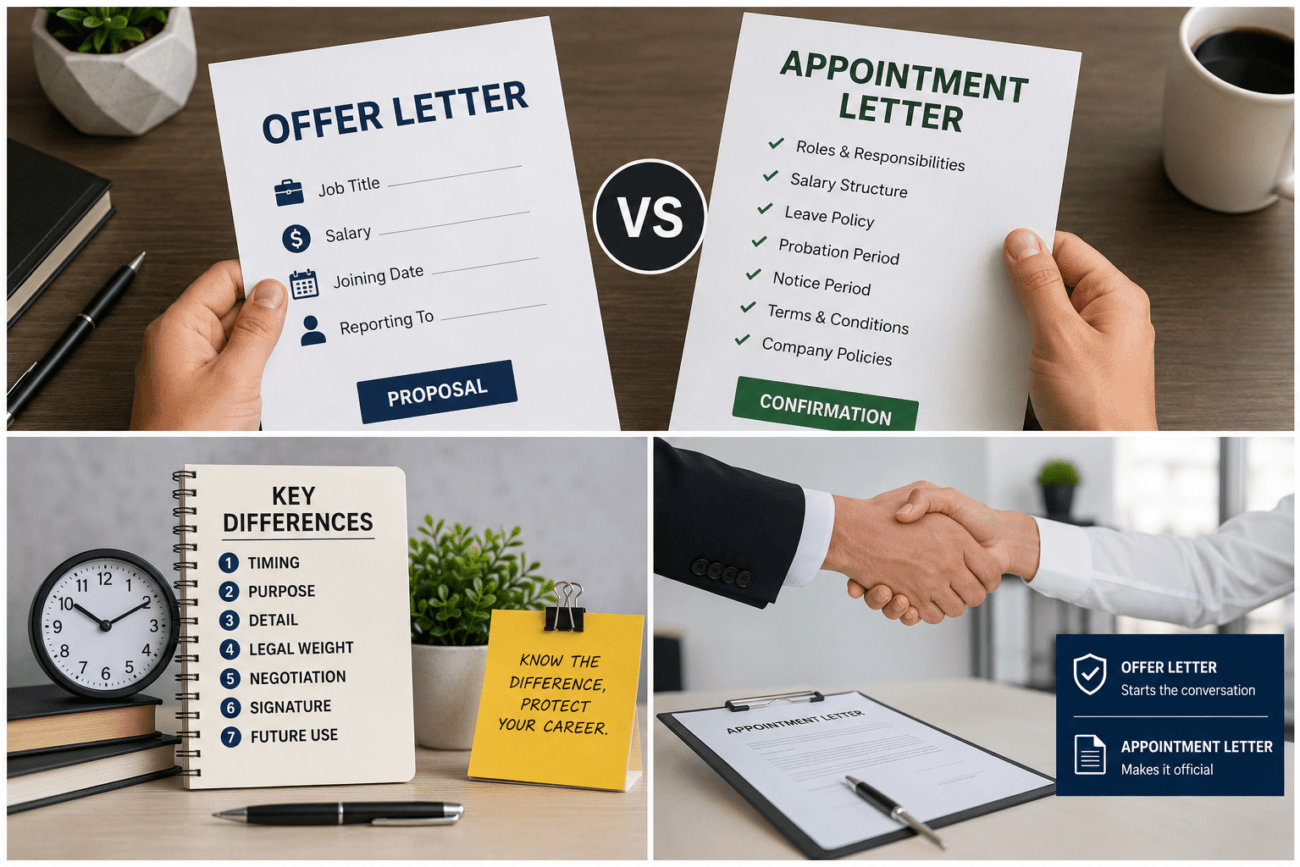
Appointment Letter Vs Offer Letter: 7 Proven Differences Every Job Seeker Should Know
I still remember the night I got my first “you’re hired” email. I read it maybe ten times, screenshotted it, sent it to my group chat, the whole thing. What I didn’t notice because who reads carefully when they’re that excited was that the email said “offer letter” at the top.
Two weeks later, on my joining day, HR handed me a completely different document to sign. Different font, different length, and honestly, different tone. That’s when I asked, half embarrassed, “wait, didn’t I already get this?” The HR person smiled like she’d heard that question a hundred times before and said, “no, that was your offer letter. This is your appointment letter.”
That one sentence saved me from a mix-up I didn’t even know existed. If you’re currently staring at one of these documents and wondering if you already have the “real” one, you’re not alone, and this appointment letter vs offer letter confusion trips up almost everyone at some point in their career.

So What’s Actually Going On Here?
Once you sit down and actually compare appointment letter vs offer letter documents side by side, the pattern becomes obvious pretty quickly. Think of it like ordering food online. The offer letter is like the confirmation message that says “your order has been placed, here’s what you’re getting, here’s the price.” The appointment letter is the actual delivery the real thing, with all the fine print about how it’s going to work.
In plain terms:
- An offer letter comes first. It’s the company saying “we want you” and giving you the basics job title, salary, expected joining date.
- An appointment letter comes after you accept the offer. It’s more detailed, more formal, and in most companies, it’s the document that actually counts as your employment record.
Once you look at appointment letter vs offer letter this way, the confusion mostly clears up. One is a proposal, the other is the paperwork that makes it official.
The 7 Real Differences I’ve Noticed
I’ve now been on both sides of this as a candidate and later helping a friend who was hiring for her small team so here’s what actually separates the two, beyond the textbook definition.
1. Timing The offer letter shows up right after your final interview round, usually within a few days. The appointment letter shows up on or around your joining date, sometimes even a week later if the HR team is slow (and trust me, some are painfully slow).
2. Purpose The offer letter is basically an invitation. It’s the company testing the waters to see if you’ll say yes. The appointment letter is confirmation — it locks things in.
3. Level of Detail Offer letters are short. Mine was maybe half a page title, salary, start date, done. My appointment letter, on the other hand, ran into several pages: leave policy, probation period, notice period, code of conduct, even a clause about confidentiality.
4. Legal Weight This is the part people miss the most in the appointment letter vs offer letter debate. An offer letter is generally not a binding contract a company can technically withdraw it (rare, but it happens). An appointment letter usually is legally binding once both sides sign it.
5. Negotiation Room You can still negotiate salary or joining date after getting an offer letter. Once the appointment letter is signed, that window is basically closed.
6. Who Signs What Offer letters are often just sent as a PDF or email with a “reply to confirm” line. Appointment letters typically need a physical or digital signature from both you and the employer.
7. What You’ll Actually Need Later Here’s something nobody tells you when you apply for a visa, a loan, or even a new SIM in some cases, banks and embassies usually ask for the appointment letter, not the offer letter, because it’s the document with real legal standing.
A Mistake I Made (So You Don’t Have To)
When I got my offer letter, I told my landlord I was “officially employed” and even started planning my move based on the salary figure written in it. Small problem my final salary in the appointment letter was slightly different because of a tax deduction structure that wasn’t mentioned in the offer letter at all.
Lesson learned the hard way: don’t make big financial decisions — moving cities, signing a lease, quitting your current job — based purely on the offer letter. Wait for the appointment letter, read every line, and only then treat the numbers as final.
Step-by-Step: What to Do When You Receive Each One
When you get your offer letter:
- Read the salary, designation, and joining date carefully.
- Reply within the given timeframe, even if it’s just to say you need a couple more days.
- If something feels off (lower salary than discussed, vague job title), ask for clarification before accepting.
When you get your appointment letter:
- Compare it line by line with your offer letter. Numbers should match, unless there’s a written explanation for the difference.
- Check the notice period clause closely this decides how much time you’ll owe if you ever leave.
- Look for probation terms. Some companies pay less during probation, and this is where it’s usually mentioned.
- Keep a signed copy for yourself. You’ll need it more often than you think.
Common Mistakes People Make
- Assuming the offer letter is the final word on salary. It usually isn’t.
- Not reading the appointment letter fully because “it’s basically the same thing.” It’s not.
- Resigning from a current job the moment the offer letter arrives, before the appointment letter confirms everything.
- Losing the physical or digital copy of the appointment letter. You’ll need it for future job switches, loans, or even background verification later on.
Which One Actually Matters More?
This is usually where people ask me the “which one actually matters more” version of the appointment letter vs offer letter question. Honestly, both matter, just for different reasons. The offer letter gets your foot in the door and gives you something to negotiate with. The appointment letter is the one that protects you legally and the one you’ll be pulling out of a folder years later when some HR person at your next job asks for proof of past employment.
If I had to boil down the entire appointment letter vs offer letter conversation into one line, it would be this: treat the offer letter as a promise, and the appointment letter as the proof.
Final Thoughts
Getting hired feels like the finish line, but there are a couple of small steps between “you got the job” and “you’re actually settled in.” Understanding the difference between these two documents is one of them, and it’s a five-minute read that can save you from awkward surprises later.
Next time you’re in this spot holding an offer letter, waiting for the appointment letter, or just double-checking what you signed — you’ll know exactly what each one means and what it means for you.
For more on getting the best terms once your offer lands, check out our guide on how to negotiate your salary before you sign anything final.
Source reference: For a deeper look at employment contract standards, see SHRM’s overview of employment offer practices.

2 thoughts on “Appointment Letter Vs Offer Letter: 7 Proven Differences”