
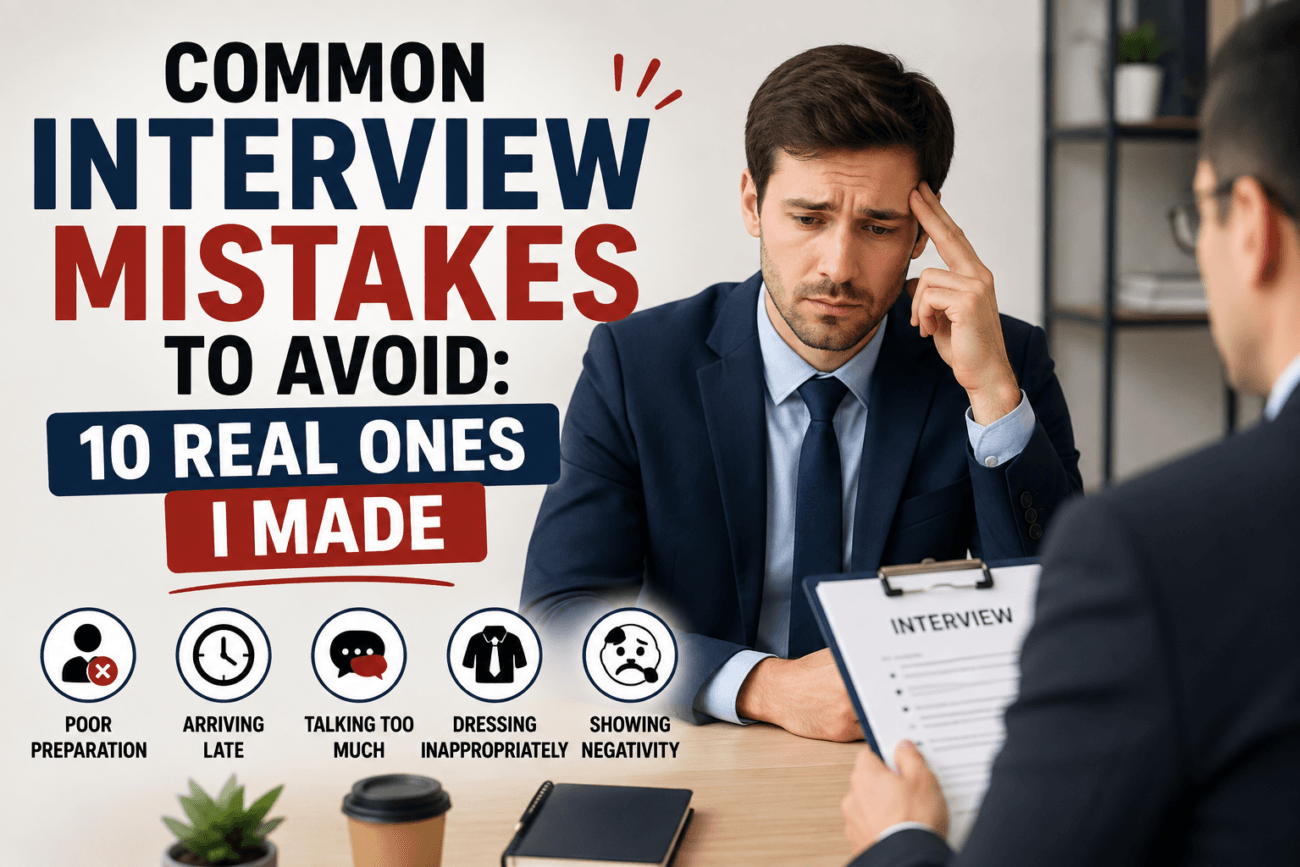
Common Interview Mistakes to Avoid: The Ones I Actually Made
I once spent forty minutes in an interview confidently answering a question the interviewer never actually asked. She wanted to know about a specific challenge on my last project. I heard “challenge” and launched into a completely different story about a difficult coworker. She was polite about it, but I watched her expression shift about ten seconds in, and I knew I’d blown it. Learning the common interview mistakes to avoid the hard way, one embarrassing interview at a time, taught me more than any prep article ever did, so here’s what actually stuck.
Mistake One: Answering the Question You Wish They’d Asked
This was mine, and it’s more common than people realize. Nerves make you latch onto the first familiar keyword in a question and run with a prepared story, whether or not it’s actually what they wanted. Now I pause for a full second before answering anything, sometimes even repeating the question back briefly, like “so you’re asking specifically about how I handled a project setback, right?” That tiny pause has saved me from this mistake more than once since.
Mistake Two: Showing Up Without Real Company Research
I used to think reading the “About Us” page counted as research. It doesn’t, not really. A friend who interviews candidates for a living told me the difference is obvious within the first two minutes: candidates who read the homepage sound generic, candidates who checked recent news, a product launch, or a LinkedIn post from the hiring manager sound genuinely interested. Now I spend fifteen minutes before every interview specifically looking for something recent and specific to mention, not just company history.
Mistake Three: Being Vague Because You Think It Sounds Humble
Early on, I gave answers like “I helped improve the process a bit” instead of “I cut our reporting time from three days to one by automating the weekly spreadsheet.” I thought specifics sounded like bragging. They don’t, they sound like proof. Vague answers just make the interviewer do extra work trying to figure out what you actually did, and most won’t bother, which makes this one of the sneakier common interview mistakes to avoid.
Mistake Four: Treating the Interview Like an Interrogation Instead of a Conversation
I sat through interviews early in my career answering every question and then just… waiting silently for the next one, like I was on trial. It felt safe, but it came across as stiff. Once I started treating it more like a two-way conversation, asking a small follow-up question here and there, referencing something the interviewer said earlier, the whole energy in the room changed. Interviewers remember candidates who felt like actual people, not ones reciting rehearsed answers back and forth.
Mistake Five: Not Having Any Questions Ready at the End
“Do you have any questions for us?” used to catch me off guard every single time, and “no, I think you covered everything” is possibly the worst answer you can give. It signals zero curiosity about the actual job. Now I keep two or three questions ready before I even walk in, things like “what does success look like in this role after the first few months?” It shows genuine interest and gives you real information about whether the job actually fits you, and it’s one of the easiest common interview mistakes to avoid once you’ve got even two questions written down beforehand.
Mistake Six: Winging It on Salary Questions
I used to get flustered and either blurt out a number too low or dodge the question entirely with something awkward like “whatever’s fair.” Neither works well. A 2026 look at common interview mistakes from Talent Loop pointed out that being evasive about salary is a genuine red flag for employers now, especially since salary transparency is increasingly expected. I do a quick check on sites like Glassdoor beforehand so I have a realistic range ready instead of freezing on the spot.
Mistake Seven: Forgetting Your Own Resume Details
This one’s embarrassing to admit, but I once blanked on the exact dates of a role I’d listed on my own resume, mid-interview, while the interviewer was looking right at the document. If you can’t clearly explain your own work history, it makes everything else you say feel less trustworthy. I now reread my resume right before every interview, even ones for roles I’ve applied to a dozen times before.
Mistake Eight: Speaking Negatively About a Past Employer
I did this exactly once and immediately regretted it. I made an offhand comment about a previous manager being disorganized, meant as a throwaway line, and watched the interviewer’s face go slightly neutral in that particular way people do when they’re recalibrating their opinion of you. However valid the complaint, it reads as a risk signal, like maybe you’ll talk about their company the same way one day. Now if I need to explain why I left somewhere, I keep it factual and forward-looking instead.
Mistake Nine: Video Interview Basics That Are Easy to Overlook
This one’s newer, but it trips people up constantly now that so many first-round interviews happen over video. Bad lighting, background noise, or not testing your connection beforehand can undercut even a strong answer. I learned this after a call where my internet dropped for ten seconds mid-sentence and I had to awkwardly reconnect and ask the interviewer to repeat the question. Test your setup fifteen minutes early, every time, no exceptions.
Mistake Ten: Not Following Up Afterward
I used to assume the interview itself was the whole process, and skipped sending anything afterward. It’s a small, easy step that a surprising number of candidates still skip entirely, and it’s one of the simplest ways to stand out with almost no effort. If you’re not sure what that actually looks like in practice, it’s worth reading through follow up email after interview, since the timing and wording both matter more than people expect.
A Quick Gut-Check Before Any Interview
Before I walk into anything now, I run through a short mental list: do I have specific examples ready, not vague ones? Have I researched something recent about the company? Do I have two questions prepared? Have I reread my own resume? That short list alone catches most of the common interview mistakes to avoid before they ever happen in the room.
Final Thoughts
Almost every mistake on this list, I made myself at some point, usually more than once before it actually stuck. None of them are about talent or qualifications, they’re about small habits that either build trust in the room or quietly chip away at it. The good news is they’re all fixable with a bit of intentional practice, and once you know what to watch for, most of these common interview mistakes to avoid become easy to catch before they happen instead of something you only notice afterward, replaying the conversation in your head on the drive home.
