
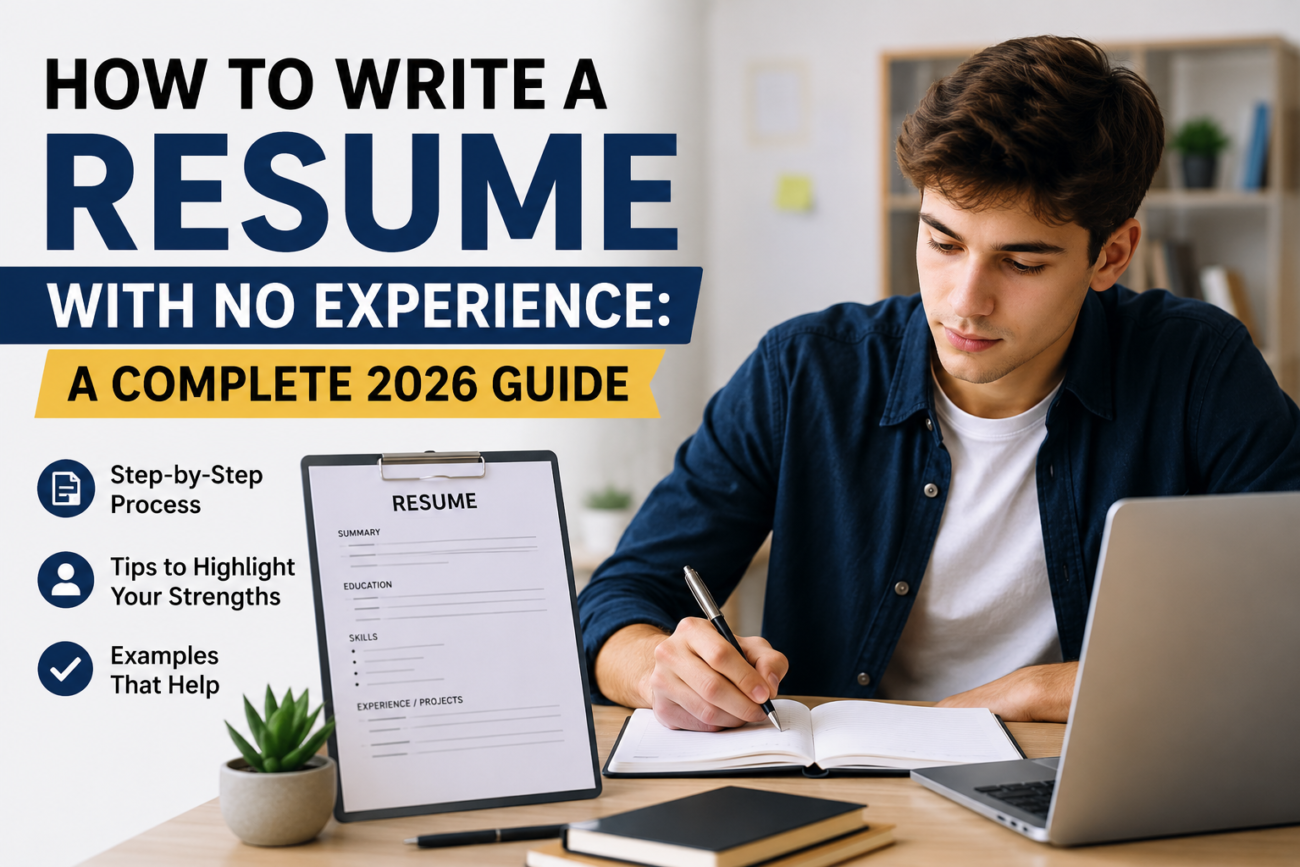
How to Write a Resume With No Experience: A Complete 2026 Guide
If you’re staring at a blank page right now trying to figure out how to write a resume with no experience, take a breath. You’re not stuck because you’re behind everyone else. You’re stuck because nobody ever actually teaches this part. School doesn’t cover it, and most resume advice online assumes you already have five years of “relevant experience” sitting around waiting to be summarized.
You don’t need that. What you need is a different way of looking at what you’ve already done.
You have more experience than You Think
Here’s the thing that trips almost everyone up: “experience” doesn’t only mean a paid job with a fancy title. It means anything where you showed up, did something useful, and got a result. That includes school projects, volunteer work, part-time gigs, helping out at a family business, running a club, or even managing something at home that required organization and follow-through.
Employers hiring for entry-level roles already know you don’t have a decade of work history. What they’re actually checking for is whether you can follow instructions, show up on time, communicate clearly, and learn quickly. Almost everyone has proof of that somewhere, even if it never felt “official.” This is really the starting point for how to write a resume with no experience that still looks credible.
Start With a Strong Summary, Not an Objective
Skip the old “seeking an entry-level position to grow my skills” line. It says nothing about you and wastes the most valuable space on the page — the top, where a recruiter’s eyes land first.
Instead, write two or three sentences that describe who you are and what you bring, even without a job title to lean on. Something like:
“Motivated recent graduate with strong organizational skills and hands-on experience managing group projects and customer interactions through volunteer and part-time work. Quick learner looking to bring the same energy to a full-time role.”
This does more work than any objective statement ever could, because it shows confidence instead of asking for a chance. According to Indeed’s career guide, a strong opening summary is one of the biggest factors that separates entry-level resumes that get read from ones that get skipped.
Turn Everyday Activities Into Real Resume Content
This is the part that actually matters most when you’re learning how to write a resume with no experience. You’re not inventing experience — you’re just presenting what you already did in language an employer understands.
A few examples of how this works in practice:
- Babysitting or tutoring? That’s “managed schedules, built trust with clients, and handled responsibility independently.”
- Ran a school club or student group? That’s “organized events, coordinated with multiple stakeholders, and managed a small budget.”
- Helped out at a family shop? That’s “assisted with inventory management, customer service, and daily operations.”
- Did group projects in school? That’s “collaborated with a team under deadline pressure to deliver a final presentation.”
None of this is exaggeration. You’re simply translating real activity into the kind of language a hiring manager is scanning for.
Builds Skills Section That Pulls Its Weight
When you don’t have a long job history, your skills section becomes one of the most important parts of the resume. This is where you list things like:
- Software you’re comfortable with (Excel, Canva, Google Workspace, whatever applies)
- Communication and customer service abilities
- Time management and multitasking
- Any certifications, even free online ones, if they’re relevant
Keep this list honest. Only include what you can actually speak to in an interview, because a good interviewer will ask. A well-built skills section is often the single fastest way to improve how to write a resume with no experience that still passes an ATS scan.
Education Becomes s Bigger Section (And That’s Fine)
With no experience wall filled up yet, your education section should carry more weight than it normally would. Don’t just list your school and graduation date. Add relevant coursework, academic projects, honors, or leadership roles within school programs if you have them.
If you were part of any competitions, presentations, or research projects, even at a basic level, include a short line about what you did and what came out of it.
Volunteer Work Deserves Its Own Spotlight
If you’ve volunteered anywhere, even briefly, give it a real section instead of squeezing it into a random line. Volunteer work shows initiative, and it often demonstrates exactly the kind of soft skills employers are trying to screen for: reliability, teamwork, and a willingness to help without being told to.
Describe what you actually did there the same way you would a job: what you were responsible for, and any small outcome or impact that resulted from it. This detail alone can make the difference in how to write a resume with no experience that still feels complete instead of empty.
Keep the Format Clean and ATS-Friendly
A lot of resumes with no experience try to compensate by using flashy templates, colors, or creative layouts to look more impressive. Don’t do this. Most companies today run resumes through an ATS (Applicant Tracking System) before a human even sees them, and complicated formatting often confuses that software, causing your resume to get rejected before it’s read.
Stick to a single column, standard fonts, and clear section headings like Summary, Skills, Education, Experience, and Volunteer Work. Simple isn’t boring here — it’s what actually gets through.
If you’re also working on your resume’s language and structure, it helps to see how a complete resume overhaul comes together once you do have some experience, so you know what to build toward next.
Don’t Apologize for Having No Experience
This is a small thing that makes a bigger difference than people expect. Never write a line like “I don’t have much experience, but…” anywhere on your resume or in your cover letter. It draws attention to a gap that the reader may not have even been focused on, and it undercuts everything else you’ve written.
Let the resume speak for what you’ve actually done. Confidence in the presentation matters as much as the content itself, and it’s one of the quieter parts of how to write a resume with no experience that people tend to overlook.
A Sample Structure to Follow
If you’re not sure how to lay all of this out, here’s a simple order that works well for a no-experience resume:
- Name and contact information
- Short summary (2-3 sentences)
- Skills section
- Education (with relevant coursework or achievements if applicable)
- Experience or Involvement (part-time work, internships, projects, clubs)
- Volunteer work
- Certifications, if any
This structure puts your strongest, most relevant sections near the top, where they’ll actually get read.
Final Thoughts on How to Write a Resume With No Experience
Learning how to write a resume with no experience isn’t about pretending you’ve done more than you have. It’s about recognizing that you’ve already done real things, and presenting them the way a hiring manager needs to see them. Everyone who has a strong resume today started exactly where you are right now: with a blank page and a handful of things that didn’t feel like “real” experience yet.
Fill in what you actually have, keep the formatting clean, and let the resume do its job. You have more to work with than you think.
