
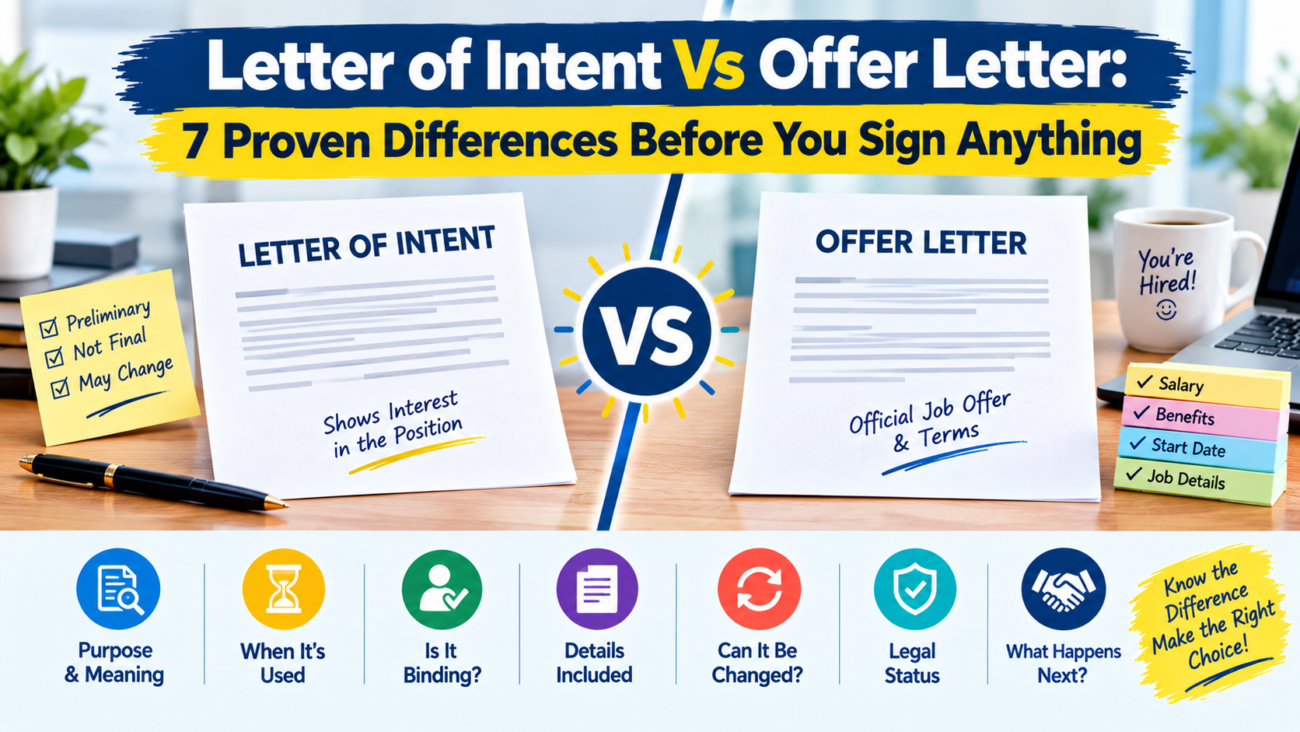
Letter of Intent Vs Offer Letter: 7 Proven Differences Before You Sign Anything
I once gave notice at my old job two days after receiving what I thought was my offer letter from a new company. I’d already told my manager, started wrapping up handovers, and mentally checked out. Then the actual offer letter arrived almost two weeks later — and it was noticeably different from the document I’d already celebrated over.
What I had actually received the first time was a letter of intent, not an offer letter. Nobody at the new company clarified that distinction, and honestly, I didn’t know to ask. That gap between the two documents left me in an uncomfortable limbo — already resigned from my old job, but without a finalized offer in hand yet.
If you’re currently staring at a document from a company and wondering whether it’s safe to start celebrating (or resigning), the letter of intent vs offer letter difference is exactly what you need to understand first.
What Actually Happened To Me
Looking back, the letter of intent I received was friendly, enthusiastic, and full of positive language about joining the team. It mentioned a role title and a rough salary range. What it didn’t have was a confirmed start date, a finalized salary figure, or any legally binding terms.
I treated it like a done deal. Big mistake. The actual offer letter, when it finally came, had slightly different compensation details and a start date a full month later than I’d expected. Thankfully it all worked out, but that two-week gap of uncertainty taught me to never again assume a letter of intent is the final word. I spent those two weeks quietly refreshing my email every few hours, not telling my old manager the full story, and genuinely unsure whether I’d made the right call resigning as early as I did.
Breaking Down Letter of Intent Vs Offer Letter, Each Document Separately
Letter of Intent (LOI):
- A preliminary, often informal document expressing a company’s intention to hire you
- Usually sent while final approvals, background checks, or budget confirmations are still in progress
- Terms mentioned (salary, role, start date) are often estimates, not finalized figures
- Generally not legally binding in the same way an offer letter is
Offer Letter:
- The formal, finalized document confirming your employment terms
- Includes exact salary, confirmed start date, designation, and reporting structure
- Usually requires your signature to formally accept, making it a binding agreement once signed
- Sent only after internal approvals are complete
The real heart of letter of intent vs offer letter comes down to this: one is a strong signal of interest, the other is the actual commitment.
Why Companies Send a Letter of Intent At All
At first, I wondered why a company would even bother sending an interim document instead of just finalizing everything and sending one offer letter. Turns out, it’s usually about timing.
Large companies, especially multinational or Gulf-based ones, often have internal approval chains that take weeks — HR, finance, and sometimes a regional office all need to sign off. A letter of intent lets them lock in a promising candidate’s interest and keep them from accepting a competing offer elsewhere, while the official paperwork slowly makes its way through approvals.
For the candidate, it feels reassuring. For someone who doesn’t know the letter of intent vs offer letter difference, though, it can feel like the hiring process is already complete when it technically isn’t.
Looking back, I wish I’d simply asked the recruiter directly how many more approval stages were left before I treated the letter as final, it would have taken one short email to clear up the whole misunderstanding.
Step-By-Step: What To Do When You Receive Either
- Check for a signature requirement. Offer letters almost always ask for your signed acceptance. Letters of intent often don’t, since they’re not meant to be binding yet.
- Look for exact figures versus ranges. A letter of intent might say “salary range of X to Y.” An offer letter will state one specific number.
- Don’t resign from your current job based on a letter of intent alone. Wait for the finalized offer letter before making that move, no matter how confident the letter of intent sounds.
- Ask directly when the formal offer letter will follow, and get a rough timeline from HR so you’re not left guessing for weeks like I was.
- Keep both documents saved, even after the final offer arrives, in case any terms shift between the two and you need to reference what was originally discussed.
A Mistake Worth Avoiding
A friend of mine turned down a counteroffer from her current employer based purely on a letter of intent from a new company. The new company’s internal approval process ended up stalling for almost a month due to a hiring freeze that kicked in right after she’d already declined her counteroffer. She was stuck in a frustrating gap with no finalized offer and no fallback option, a situation that could’ve been avoided with one simple clarifying question upfront.
This is exactly why understanding letter of intent vs offer letter matters beyond just vocabulary — it affects real decisions like resignations, counteroffers, and financial planning around a job change.
Common Mistakes To Avoid
- Resigning from your current job based on a letter of intent instead of a finalized offer letter.
- Assuming the salary figure in a letter of intent is guaranteed to stay the same.
- Not asking HR for a timeline on when the official offer letter will follow.
- Treating a letter of intent as legally binding when it usually isn’t.
- Forgetting to compare both documents once the final offer arrives, in case terms changed.
Where This Fits Into Your Bigger Job Search
Once the actual offer letter arrives, it’s worth understanding how it differs from your eventual appointment letter too — I’ve covered that comparison in detail in my Appointment Letter Vs Offer Letter guide, which is the natural next step after this stage.
For a broader, more formal explanation of how preliminary hiring documents work in general, Indeed’s career resources are a solid reference if you want the wider global perspective beyond just this specific comparison.
My Honest Take
Nobody warns you that a friendly, exciting email from a new company might not actually be your final offer. The letter of intent vs offer letter gap caught me off guard once, and it’s a surprisingly common trap, especially with larger companies that take their time finalizing paperwork. If you’re in that waiting period right now, hold off on the big decisions until the real offer letter lands in your inbox, signature line and all.
