
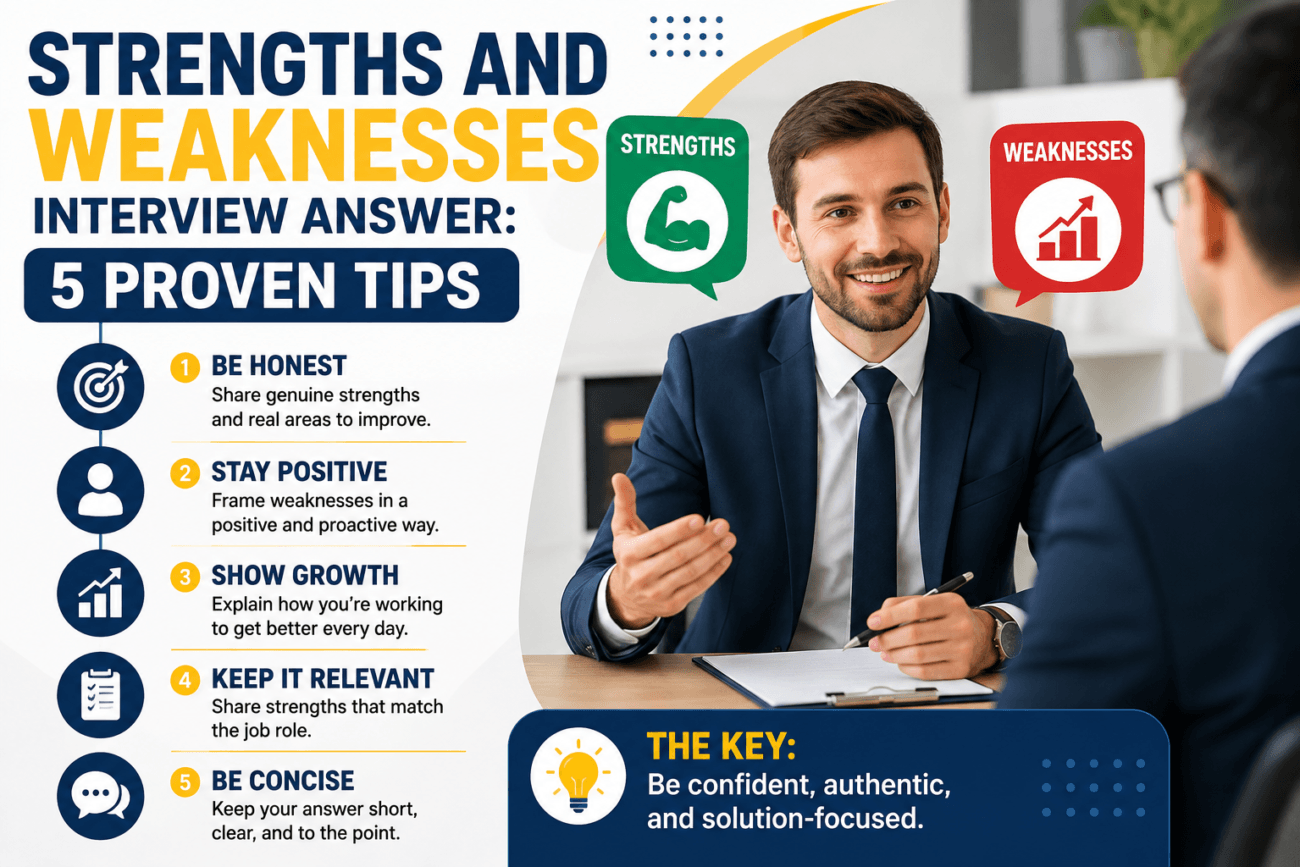
Strengths and Weaknesses Interview Answer: The One I Botched Before Getting It Right
I once answered “what’s your biggest weakness” with “I’m a perfectionist.” I actually said that, out loud, in a real interview, thinking it was clever. The interviewer’s face didn’t change much, but I found out later from someone who worked there that it’s basically the answer everyone gives, and everyone rolls their eyes at internally. Figuring out a strengths and weaknesses interview answer that doesn’t sound like a script took me a few embarrassing attempts before it actually started working.
If you’re currently rehearsing your own version of “I care too much” or “I work too hard,” let’s fix that before it costs you an offer the way mine almost did.
Why This Question Trips Up Even Prepared People
The strength part feels easy enough, most people can name something they’re good at. It’s the weakness half that turns people into either overly rehearsed robots or, like me that one time, weirdly proud of a fake flaw dressed up as a strength. The interviewer isn’t actually trying to catch you in a trap. They’re checking two things: do you know yourself well enough to be honest, and do you actually work on the stuff you’re not great at.
Building the Strength Half So It Doesn’t Sound Like a List
My early strength answers were basically adjectives strung together: “I’m organized, I communicate well, and I’m a team player.” None of that means anything without proof attached to it.
What actually worked was picking one strength, tied specifically to the role, backed by a real example with an outcome. For a project coordination role I interviewed for, I said something like:
“One of my strongest skills is keeping multiple moving pieces organized under a tight deadline. In my last role, I managed a launch where our creative agency backed out three weeks before the deadline. I built a new timeline, pulled together an internal team overnight, and we still hit the original launch date.”
That’s specific enough that the interviewer can actually picture it happening, instead of just nodding at a word.
The Weakness Answer That Actually Worked
After the perfectionist disaster, I switched to something real. I genuinely used to struggle with delegating tasks, holding onto things longer than I should because I trusted my own execution more than handing it off. So I said exactly that, followed immediately by what I’d done about it:
“Earlier in my career, I held onto too much myself instead of delegating, mostly out of habit rather than necessity. I started deliberately assigning at least one task per project to someone else, even when it would’ve been faster to just do it myself, and it’s made a real difference in how my team operates now.”
Real weakness, real fix, real evidence of progress. That’s really the whole formula behind a strengths and weaknesses interview answer that actually lands, and it’s a completely different experience for the interviewer than hearing a humble-brag disguised as a flaw.
Step-by-Step: How I Actually Prepare This Now
- Reread the job posting and pick a strength that’s genuinely relevant, not just something I’m proud of in general. If the role is heavy on client communication, that’s the strength I lead with, not something unrelated like technical troubleshooting.
- Attach one specific story to that strength, with a real outcome or number if I have one.
- Pick a real weakness, not a job requirement in disguise. If the role heavily depends on attention to detail, “I’m not great with details” is a genuinely bad choice, obviously.
- Explain the concrete step I’ve taken to work on it, not just “I’m aware of it.” Vague awareness without action is exactly what made my perfectionist answer land so flat.
- Practice saying both out loud, not just thinking through them mentally. It’s a completely different experience saying a weakness out loud versus rehearsing it silently in your head.
The Follow-Up Question That Actually Decides This
Here’s the part most people don’t prepare for at all. A good interviewer won’t just accept your weakness answer and move on, they’ll ask something like “how are you actually fixing that?” or “would your last manager agree with that assessment?” If your weakness was genuine, this is easy, you already have the story. If you picked a fake, safe weakness, this is exactly where it falls apart, because there’s no real progress to describe.
I got hit with this follow-up once after giving a slightly padded answer, and I fumbled it badly because I hadn’t actually thought through what I was “doing about it.” Since then, I only ever pick weaknesses I can genuinely speak to under a follow-up question, because that follow-up is really where a strengths and weaknesses interview answer gets won or lost.
A Simple Structure If You Need One
If you want something to hang the whole answer on, this rough shape works well: lead with the strength and a specific example, transition naturally with something like “on the other hand, an area I’ve been actively working on is…”, then close the weakness with the concrete step you’ve taken and where things stand now. Keep the whole thing under two minutes combined, closer to ninety seconds if you can.
Mistakes I’ve Made (And Seen Others Make)
- Picking a weakness that’s secretly a brag, like “I work too hard” or “I care too much,” interviewers see through this instantly now
- Choosing a weakness that directly conflicts with a core requirement of the role
- Giving a strength with no real example, just a list of adjectives
- Not preparing for the natural follow-up question about how you’re actually addressing the weakness
- Sounding too rehearsed, like you’re reciting rather than actually reflecting
Why This Matters More With AI in the Mix Now
A lot of companies now run interviews partly through AI screening tools that analyze structure and tone, not just the words themselves. According to a 2026 breakdown from The Interview Guys, structured answers using a clear situation-obstacle-action-result format score noticeably higher than rambling, unstructured ones, which lines up with what actually worked for me once I stopped winging it and started using a consistent shape for my answer.
If You’re Prepping the Rest of Your Interview Too
This question usually shows up alongside a few others worth having ready at the same time. If you haven’t nailed down why should we hire you yet, it’s worth prepping both together, since they draw on a lot of the same self-awareness and evidence you’re building here.
Final Thoughts
A good strengths and weaknesses interview answer isn’t about finding the perfect fake flaw or the most impressive-sounding strength. It’s about picking something real on both sides, backing it with actual proof, and being ready for the follow-up question that decides whether the interviewer believes you. My perfectionist answer taught me that the safe, rehearsed version fools nobody. The honest, specific version of a strengths and weaknesses interview answer, even though it felt riskier to say out loud the first time, is what actually landed.
